

U.S. SENATE – U.S. Senator Steve Daines today spoke with State Director Jon Raby of the Nevada State Office Bureau of Land Management in a Senate Energy and Natural Resources hearing about the Small County PILT Parity Act. Daines also discussed the importance of his Restoring State Mineral Revenues Act.
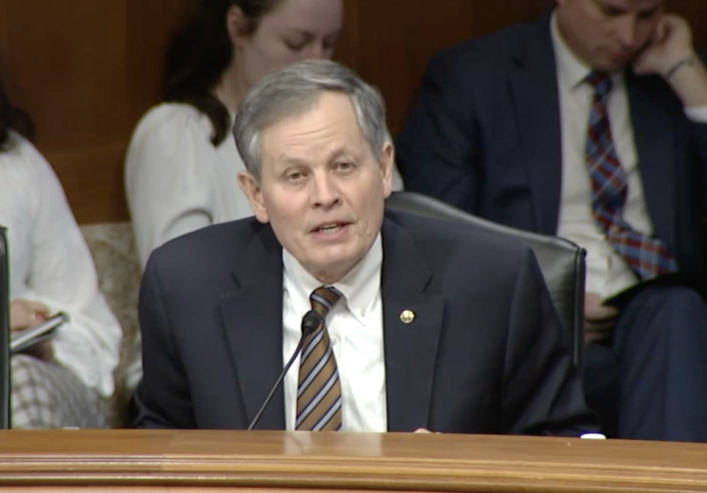
Watch the full exchange HERE.
Daines on his Small County PILT Parity Act:
Daines: I’d like to begin with my bipartisan Small County PILT Parity Act. We have discussed the importance of the PILT program in this committee many times. It’s got strong bipartisan support. I can tell you it’s essential for Montana’s rural counties to be able to provide crucial services such as emergency response as well as public safety. However, the current PILT formula puts counties with a population less than 5,000 at a disadvantage by capping their payments and limiting the revenue streams that they have. The Small County PILT Parity Act, which has previously passed out of this committee with bipartisan support, would rectify this disadvantage. To fix this, the PILT calculation table should be expanded to accommodate population tiers at levels down to 1,000 people or even fewer—and not just stop at 5,000. These counties can and should receive fair compensation without reducing payments to counties with larger populations. When you’re kind of this East Coast-centric world of DC, they look at everything on a per capita basis. You get out west, it’s all about square miles. And so I’ve got some very large counties in terms of geographical area, but very small populations and talk to the folks who are trying to, the road grading teams, the public safety teams, they got a lot of ground to cover, despite the fact they’ve got low population, but massive land masses.
So I want to thank Ranking Member Cortez Masto, for co-leading this bill to help bring parity to the PILT program, and thank you to the members of this committee who have cosponsored. Question to have for Mr. Raby: Nevada and Montana both have numerous counties with populations of less than 5,000. Those are the kind of counties I like to go to. You don’t see hardly anybody, and you have a chance to experience amazing parts of, I’ll still call it the real Montana that’s still out there. Do you agree that expanding the PILT table will help support counties with high federal land ownership, but low populations.
Raby: Absolutely.
Daines: A follow-up question, can you confirm for the committee that the bill does not change the calculations for counties with populations above 5,000, but we are simply expanding the pie, not taking away from larger counties.
Raby: Yes, I can confirm that.
Daines on his Restoring State Mineral Revenues Act:
Daines: Turning to my Restoring State Mineral Revenues Act. Under the Mineral Leasing Act, revenues generated by oil and gas development on federal land are supposed to be split 50/50 between the federal government and the states and counties where the oil and gas is actually developed. But in classic D.C. bureaucracy form, the federal government charges states a 2 percent admin fee on their half of the revenues. This is just a backhanded way to take more money from the states and counties affected most. This bill that I have is simple – It eliminates the two percent fee and returns the revenue sharing to a true 50/50 split. It has strong support from county governments and has passed this committee multiple times in various revenue sharing bills. Now it’s time to get it to the President’s desk and make our counties whole. Mr. Raby, back to you, do you agree that the states and counties where federal oil and gas development occur should receive their fair share of revenue generated within their borders?
Raby: I agree 100 percent that should happen.
###
Contact: Matt Lloyd, Gabby Wiggins